
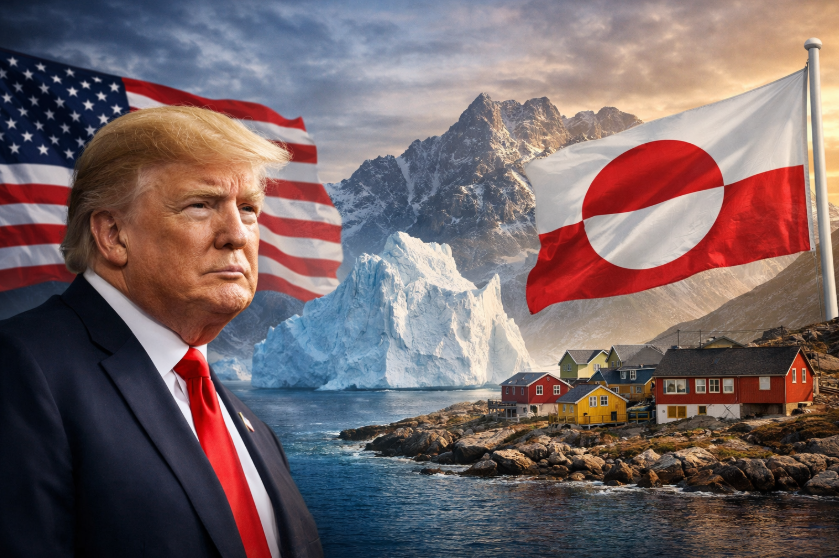
Donald Trump is signaling renewed American assertiveness toward Greenland, reviving a strategic discussion that has long unsettled European elites and exposed deep divisions between nationalist and globalist visions of governance. As reported by Fox News, Trump and his allies are openly exploring ways to strengthen U.S. influence over the Arctic territory, a move that could lead to a direct diplomatic confrontation with Denmark.
Greenland is an autonomous territory within the Kingdom of Denmark, but its geographic position places it squarely within North America’s strategic orbit. The island has become increasingly valuable due to its proximity to key Arctic shipping lanes, vast untapped natural resources, and its role in global military surveillance. As competition intensifies with hostile powers such as China and Russia, Greenland’s importance to U.S. national security has only grown.
At the center of this concern is Pituffik Space Base—formerly known as Thule Air Base—which serves as a critical component of America’s missile defense and early-warning systems. The base gives the United States unmatched visibility into Arctic activity, a region that is rapidly becoming a focal point of military and economic rivalry.

According to Fox News, Trump allies indicate the administration is considering a range of options to expand U.S. engagement with Greenland. These include strengthening defense agreements, deepening economic partnerships, and increasing diplomatic leverage. While Denmark has reiterated that Greenland is not “for sale,” Trump’s posture reflects a broader willingness to challenge assumptions that have long constrained American power.
Denmark’s resistance is emblematic of a wider European approach that prioritizes international consensus and bureaucratic process over decisive action. Trump’s worldview stands in sharp contrast. His emphasis on sovereignty, borders, and national interest rejects the notion that America must subordinate its security needs to the approval of foreign governments or global institutions.
From a biblical perspective, this divide is not merely political but moral. Scripture affirms that nations are ordained by God and entrusted with the responsibility to protect their people. Leaders who neglect that duty in favor of abstract global ideals risk inviting instability and judgment. Strength, vigilance, and ordered authority are not vices but virtues when exercised righteously.
Trump’s renewed focus on Greenland reflects that understanding. It is not an act of imperial ambition, but a recognition that strategic weakness invites aggression. As the Arctic opens and adversaries maneuver for advantage, the United States cannot afford passivity.
Whether Denmark welcomes the pressure or not, Trump’s approach signals that America will no longer ignore regions vital to its security. Greenland, long treated as a peripheral concern by Western elites, is once again at the center of serious geopolitical calculation—and under Trump, American interests are unapologetically first.