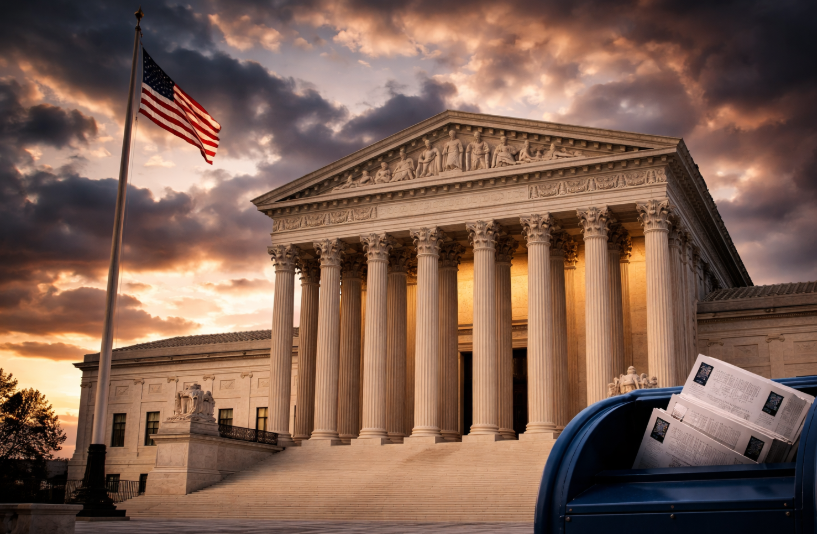
In a significant Supreme Court decision on January 14, 2026, the nation’s highest court ruled that federal candidates have the legal right to challenge state election laws that govern how ballots are counted — including controversial mail-in voting provisions.
The case, Bost v. Illinois State Board of Elections, centered on a lawsuit brought by Republican Congressman Michael Bost of Illinois and two Republican presidential electors. They argued that Illinois’ law allowing mail-in ballots postmarked on or before Election Day to be counted for up to 14 days after Election Day conflicted with federal statutes that set the timing for federal elections.
Lower courts had previously dismissed the lawsuit, concluding that Bost lacked Article III standing — meaning he had not shown a concrete, personal injury sufficient to warrant federal court review. But in a 7-2 decision, the Supreme Court reversed those rulings and held that candidates for federal office are entitled to sue when they believe state election rules affect the fairness and administration of the elections in which they compete.

Chief Justice John Roberts authored the majority opinion, joined by Justices Samuel Alito, Clarence Thomas, Neil Gorsuch, Brett Kavanaugh and with Justice Amy Coney Barrett concurring. Justices Sonia Sotomayor and Ketanji Brown Jackson dissented.
The Court’s ruling does not immediately strike down the Illinois law nor address the substantive constitutionality of counting late-arriving mail ballots. Instead, it clarifies that federal candidates can bring challenges when they believe state election procedures may influence the administration or outcome of federal contests.
The decision is poised to have broad implications well beyond Illinois, especially as the nation moves closer to the 2026 midterm elections and later the 2028 presidential race. States with similar mail-in voting provisions — including those that permit ballots to be counted days or even weeks after Election Day if postmarked on time — may now face a wave of legal challenges from candidates asserting their rights under federal election law.
Supporters of the ruling argue it strengthens election integrity, giving candidates a meaningful judicial avenue to contest state practices they believe undermine the uniform application of federal election statutes. Critics, including the dissenting justices, caution that expanding standing could flood courts with politically motivated lawsuits and inject the judiciary deeper into election administration disputes.
This case reflects ongoing national tensions over how elections should be conducted and who has the legal authority to enforce or challenge those rules — a debate that continues to shape American democracy in the post-2020 era.