
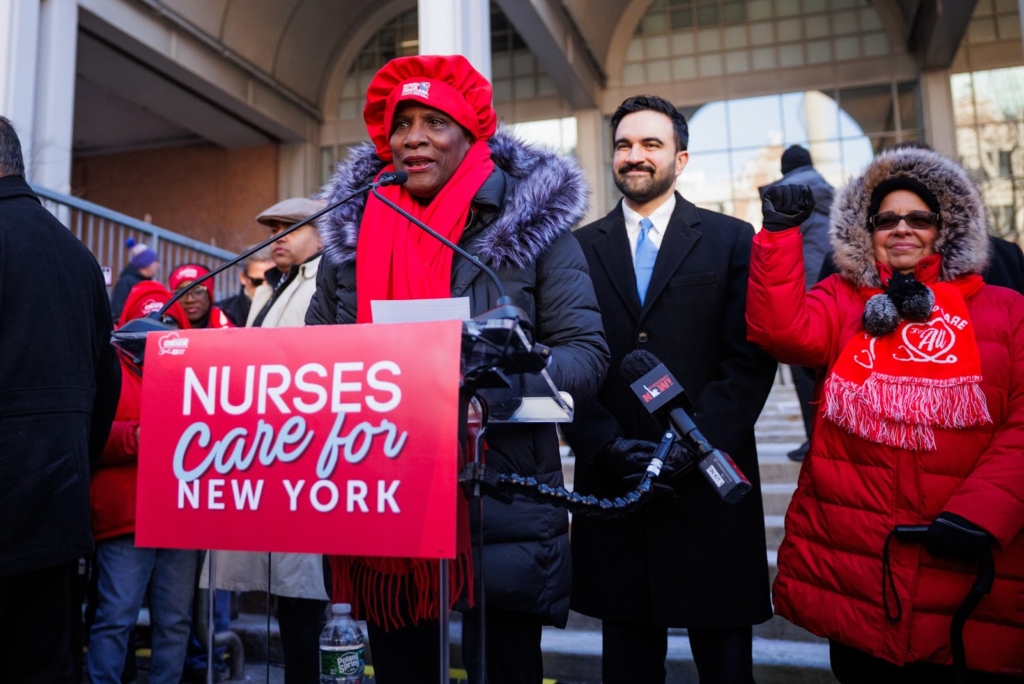
New York City’s newly inaugurated mayor, Zohran Mamdani, has thrust his so-called “affordability agenda” into the spotlight by publicly backing demands from the city’s largest nurses’ union for wages that could exceed $200,000 annually.
Mamdani joined striking members of the New York State Nurses Association this week — a walkout described by union leaders as the largest nurses’ strike in the city’s history, involving nearly 15,000 healthcare workers at major hospitals like Mount Sinai, NewYork-Presbyterian, and Montefiore. His presence at the picket line — alongside Sen. Bernie Sanders, a frequent political ally — was widely shared on social media, with footage showing the mayor standing among nurses while critics loudly debate the broader impact of such demands.
Supporters argue that nurses deserve higher pay for lifesaving work in a city with one of the nation’s highest living costs and steep healthcare demands. Videos from recent rallies portray Mamdani urging striking nurses to stand firm, saying the city should not treat healthcare workers as disposable. For many families struggling with childcare, housing, and inflation, the issue resonates deeply.

Yet the mayor’s endorsement has also drawn strong criticism. A Washington Post editorial blasted Mamdani for acting more like a college activist than a municipal leader responsible for a city of 8.5 million residents. The paper suggested his appearance at the strike could be a political play toward broader healthcare reforms such as single-payer insurance or increased government control.
At issue is who ultimately bears the cost if nurse compensation rises to the levels sought by union negotiators. According to reporting from The New York Times, experienced nurses at the largest hospital systems already earn between about $162,000 and $165,000 annually — before accounting for overtime. Critics argue that additional increases could drive up health insurance premiums, hospital costs, and ultimately the expenses faced by everyday patients and employers.
Bill Hammond, a senior health policy fellow, told the Washington Free Beacon that proponents of higher wages shouldn’t pretend the money comes “out of the air,” pointing out that insurance premiums and taxpayer contributions fund much of healthcare spending. He also cautioned that other union demands — such as stricter staffing ratios — would compound expenses by requiring hospitals to hire yet more staff.
The debate adds another layer to broader concerns about healthcare affordability in New York, where costs already rank among the nation’s highest. Analysts warn that wage increases without commensurate productivity gains could accelerate this trend.
An ironic twist in the debate is how the city taxes income. If nurses’ salaries do climb above the $200,000 threshold they seek, such earnings could put them into higher tax brackets, making them subject to increased New York City and New York State income taxes. Some analysts even suggest that heightened tax burdens might encourage health professionals to relocate to lower-tax states such as Florida.
As the strike continues and negotiations unfold, the broader conversation about sustainable wages, healthcare costs, and what “affordability” truly means for New Yorkers is likely to intensify — raising tough questions for city leadership, workers, businesses, and families alike.





























2 Responses
Nurses currently can’t earn a living wage. Sorry, I have no problem with this. Why don’t you cover the multi million dollar salaries by the CEO’s of these for profit healthcare systems instead of attacking the front line workers. Intellectual dishonesty. Hiring more nurses and paying them a living wage isn’t why the healthcare system is unaffordable and until you educate yourself on the topic you are spreading the most malicious and despicable lies possible. Shame on this phony “christian” publication. In your efforts to make a political statement aside from defending the use of evil in another article you are one of the biggest vehicles of leftist non Christian dogma I’ve seen on the internet. The literal wolf in sheeps clothing.
Nurses currently can’t earn a living wage. Sorry, I have no problem with this. Why don’t you cover the multi million dollar salaries by the CEO’s of these for profit healthcare systems instead of attacking the front line workers. Intellectual dishonesty. Hiring more nurses and paying them a living wage isn’t why the healthcare system is unaffordable and until you educate yourself on the topic you are spreading the most malicious and despicable lies possible. Shame on this phony “christian” publication. In your efforts to make a political statement aside from defending the use of evil in another article you are one of the biggest vehicles of leftist non Christian dogma I’ve seen on the internet. The literal wolf in sheeps clothing. Interesting you label my content as spam. I guess anything that challenges your propaganda qualifies as spam.