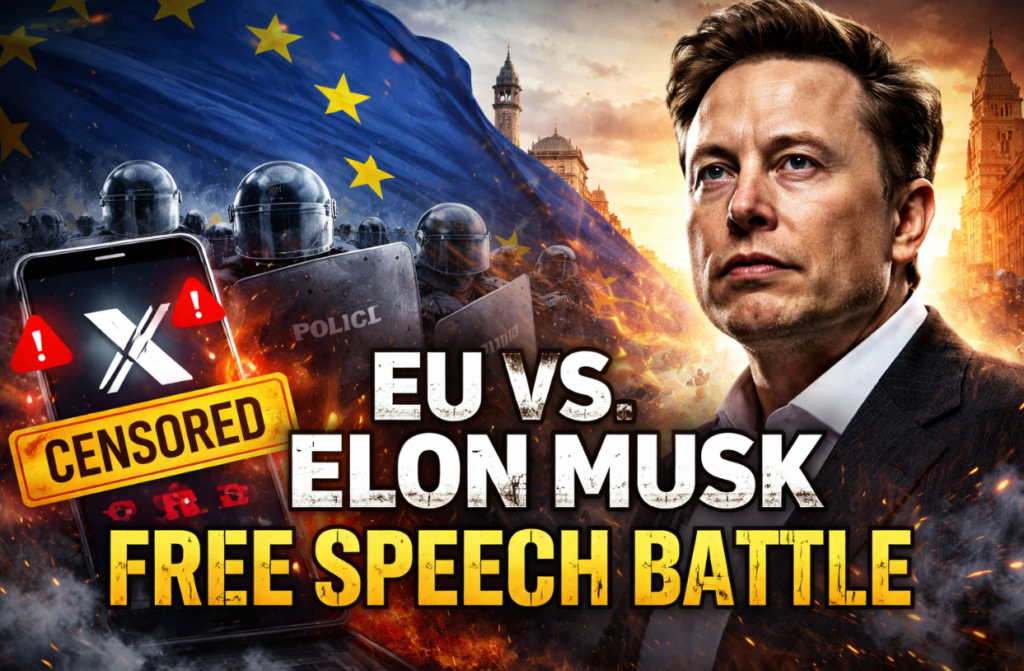
The European Union’s long-running conflict with Elon Musk over free speech intensified this week as French authorities signaled a new phase of regulatory pressure aimed squarely at his social media platform, X. The dispute underscores a growing divide between globalist governance in Europe and the principle of free expression rooted in Western—and biblical—traditions.
As reported by ZeroHedge, officials in Paris are positioning themselves at the forefront of enforcement actions under the EU’s Digital Services Act (DSA), a sweeping regulatory regime that grants bureaucrats broad authority to police online speech. While framed as a tool to combat “disinformation” and “hate,” critics argue the law effectively deputizes the state as arbiter of truth.
Since acquiring X, Musk has openly challenged the prevailing censorship model embraced by European elites. He has restored accounts previously banned for political reasons and loosened content moderation policies that he argues were designed to suppress lawful speech. Musk has repeatedly stated that free speech—speech that is legal, even if unpopular—must be protected if democratic societies are to survive.

That position has placed him directly in the crosshairs of EU regulators. French officials have accused X of failing to comply with DSA requirements, including demands for increased content takedowns, algorithmic transparency, and cooperation with government-approved “fact-checkers.” Penalties for noncompliance can reach up to six percent of a company’s global revenue—an enormous cudgel meant to compel obedience.
The escalation from Paris is not occurring in isolation. It reflects a broader European trend toward centralized control over speech, driven by fear of populist movements, independent journalism, and platforms unwilling to enforce ideological conformity. Under the banner of “safety” and “democracy,” unelected regulators are moving to silence dissenting voices—particularly those challenging progressive orthodoxy on issues such as national sovereignty, mass migration, and cultural decline.
From a Christian perspective, the issue strikes at the heart of moral responsibility and truth. Scripture consistently warns against rulers who “call evil good and good evil” (Isaiah 5:20). When governments claim the authority to define acceptable speech, they inevitably suppress truths that expose corruption, challenge injustice, or affirm God-ordained realities about human nature and society.
Musk’s resistance has made him a symbolic figure in this struggle, though the stakes extend far beyond one man or one platform. If the EU succeeds in forcing X into compliance, the precedent will embolden further crackdowns—both in Europe and in nations eager to adopt similar controls.
The clash now unfolding in Paris represents more than a regulatory dispute. It is a test of whether free societies will remain anchored to open debate and moral clarity, or whether they will submit to technocratic censorship enforced by political power. As Europe tightens its grip, the rest of the world is watching closely.