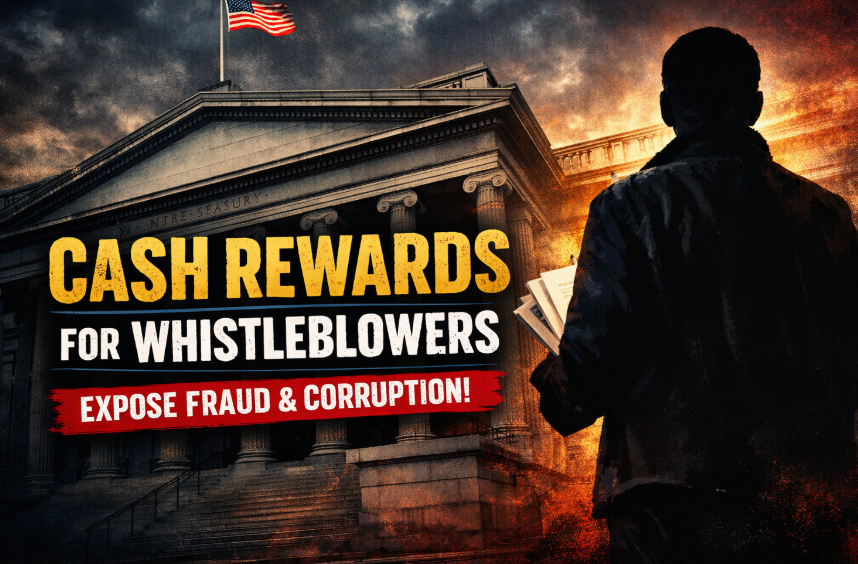
Treasury Secretary Scott Bessent announced a sweeping initiative granting substantial cash rewards to individuals who expose fraud, waste, and corruption within federal agencies — a measure meant to restore accountability to Washington and return stewardship to the American people.
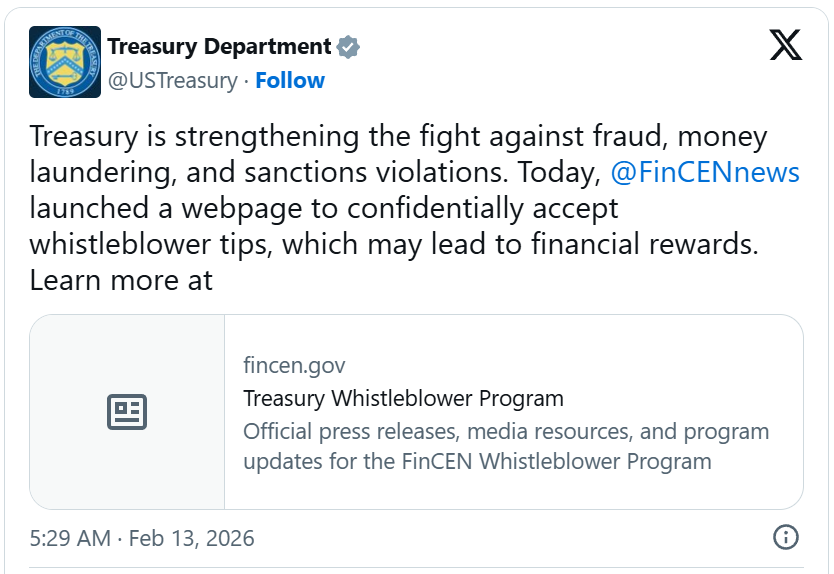
Bessent detailed a new incentive structure designed to encourage whistleblowers to come forward with credible evidence of misconduct involving taxpayer dollars. The Treasury Department will reportedly expand and strengthen financial reward programs for those who give actionable information leading to the recovery of misused funds or the prosecution of fraudulent actors.
The announcement occurs amid mounting public frustration over ballooning federal spending and persistent concerns about bureaucratic opacity. For years, Americans have watched as unelected officials wield enormous financial authority with limited transparency. Bessent’s proposal intends to empower citizens — not entrenched insiders — to hold government agencies accountable.

Bessent emphasized that stewardship of public funds is a sacred trust. From a biblical perspective, government officials are called to act as servants, not rulers, recognizing that “it is required in stewards that a man be found faithful” (1 Corinthians 4:2). When that trust is violated through fraud or corruption, justice demands exposure and correction.
The cash rewards are intended not only as financial incentives but also as a signal that the administration is serious about dismantling deep-rooted systems of waste. By placing real monetary value on truth-telling, the Treasury Department is sending a message: those who courageously expose wrongdoing will be protected and rewarded.
Critics of previous oversight efforts have argued that internal watchdog systems regularly fail because of bureaucratic self-protection. By expanding whistleblower incentives, the Treasury may be shifting oversight beyond agency walls and into the hands of ordinary Americans. That approach demonstrates a broader conservative principle — that power is safest when distributed and accountable, not centralized and shielded from scrutiny.
For Christian voters concerned about fiscal responsibility, this development denotes more than a policy tweak. Scripture consistently warns against dishonest scales and unjust gain. Taxpayer dollars are not abstract numbers; they represent the labor of families striving to provide for their households. Any misuse of those funds is not simply an administrative failure — it is a moral failure.
While further implementation details will unfold in the coming months, the initiative signals a renewed commitment to rooting out corruption and restoring integrity to federal institutions. Whether the program produces significant recoveries remains to be seen, but the principle is clear: stewardship matters, and accountability isn’t optional.
In a time when trust in government remains fragile, firm steps aimed at transparency may help rebuild confidence — not through rhetoric, but through action.