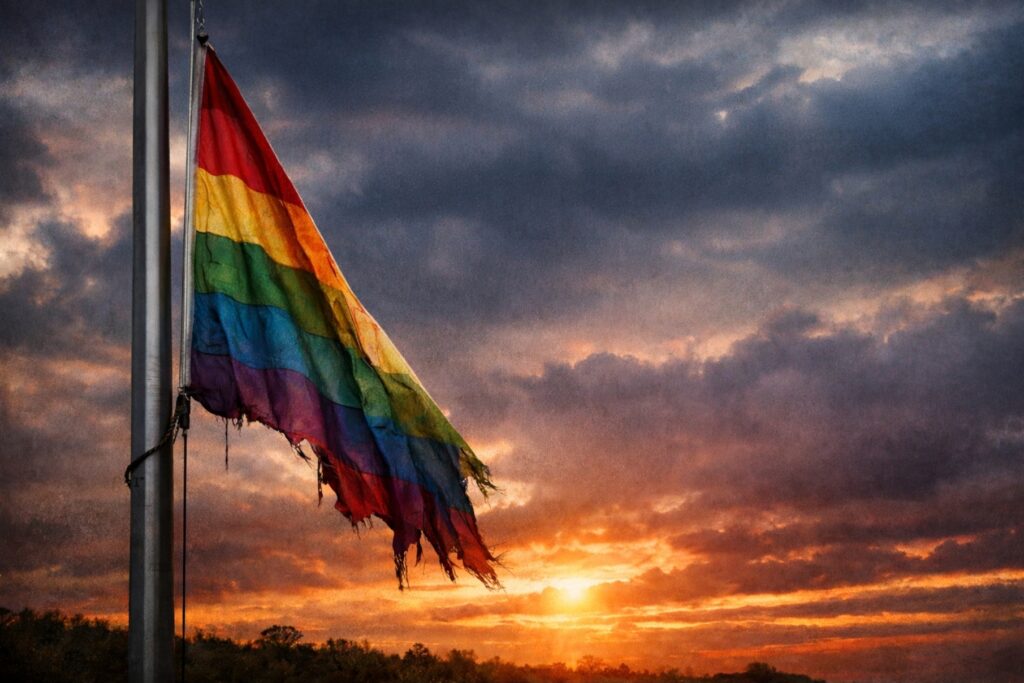
A new national survey suggests that identification with the “LGBTQ” label has declined slightly in 2025, marking the first measurable dip after more than a decade of rapid growth.
Fresh data from Gallup indicates that 9 percent of U.S. adults now identify as “LGBTQ,” down slightly the previous year. While the drop is modest, it represents a pause in what had been a steady and dramatic upward trajectory.
Gallup’s long-running polling shows that identification with the “LGBTQ” category has more than doubled since 2012, when it stood at 3.5 percent. The increase has been driven largely by younger Americans, particularly members of Generation Z. According to the latest data, nearly one in five Gen Z adults — 19.8 percent — identify as “LGBTQ,” far outpacing older generations.

By contrast, identification rates remain far lower among older Americans. Baby Boomers and members of the Silent Generation report single-digit percentages, reflecting a sharp generational divide in how Americans understand and describe sexual identity.
The survey also indicates that most of the growth over the past decade has come from individuals identifying as bisexual, rather than exclusively homosexual. This distinction has contributed to the rapid rise in overall “LGBTQ” identification, particularly among young women.
While Gallup did not attribute the recent dip to any single cause, the slowdown comes after years of intense cultural, corporate, and educational promotion of “Pride” messaging and gender ideology. From classrooms to boardrooms to federal agencies, Americans have witnessed a sweeping normalization of ideas about sexuality and “gender identity” that would have been unthinkable just a generation ago.
For many Christian families, the numbers highlight deeper concerns about cultural formation and moral clarity. Scripture affirms that God created mankind male and female, and that marriage is a covenant between one man and one woman. The rapid reshaping of sexual norms over the past decade has often placed biblical convictions at odds with prevailing cultural pressures.
At the same time, the slight decline in identification may signal that the explosive growth of recent years is beginning to plateau. Whether the change represents a statistical fluctuation or the start of a broader stabilization remains to be seen.
What is clear is that generational differences remain stark. Young Americans have come of age in a media environment saturated with identity-based messaging, while older generations were shaped by a more traditional moral framework rooted in longstanding social and religious norms.
As policymakers, educators, and church leaders consider the implications of these trends, the Gallup data underscores the importance of strengthening families, protecting parental rights, and preserving freedom of conscience. In a culture increasingly defined by shifting identities, the enduring truths of biblical anthropology stand in sharp contrast to the instability of modern self-definition.
Whether this year’s dip marks a turning point or merely a pause, the cultural debate over sexuality, family, and the created order is unlikely to fade anytime soon.