New data suggests a large majority of Somali refugee households living in Minnesota rely on government assistance, raising renewed questions about immigration policy, assimilation, and the long-term financial burden placed on American taxpayers.
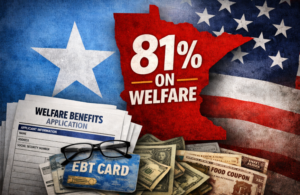
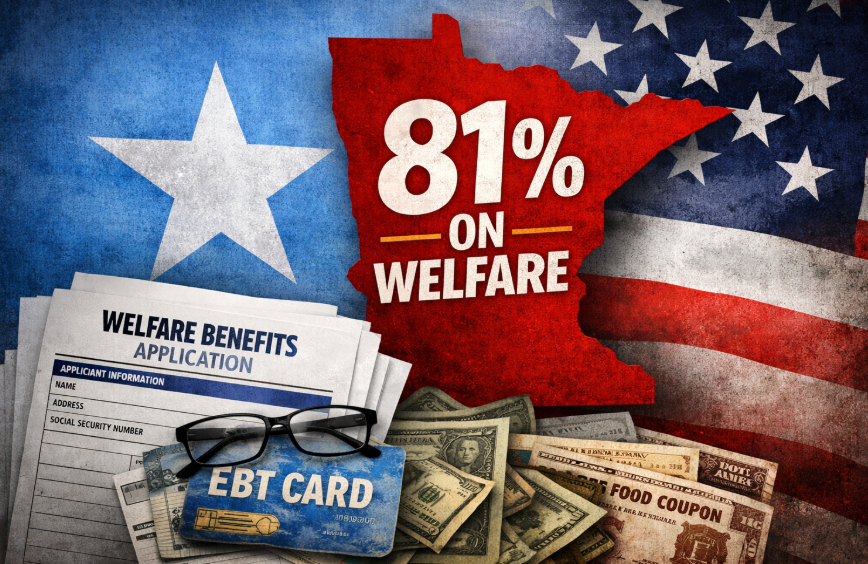
According to reporting by Breitbart News, an analysis of U.S. Census Bureau data shows that roughly 81 percent of households headed by Somali refugees in Minnesota receive at least one form of taxpayer-funded welfare assistance. The findings come from research conducted by the Center for Immigration Studies using ten years of data from the Census Bureau’s American Community Survey.
The study highlights a sharp contrast between Somali refugee households and native-born residents in the state. While more than eight in ten Somali-headed households rely on some form of welfare, only about 21 percent of native-born Minnesotan households receive similar assistance. The disparity spans several major government programs.

Among Somali refugee households in Minnesota, about 54 percent receive food stamps, 73 percent rely on Medicaid, and 27 percent collect cash welfare assistance, according to the data. By comparison, significantly smaller shares of native-born households receive these benefits.
The gap becomes even more pronounced in households with children. Researchers found that approximately 89 percent of Somali-headed households with children are enrolled in at least one welfare program. Medicaid participation alone reaches roughly 86 percent among these families, while about 62 percent receive food stamps and 23 percent receive cash welfare assistance.
Center for Immigration Studies researcher Jason Richwine summarized the findings by noting that “nearly every Somali household with children” in Minnesota receives some form of government assistance.
Minnesota has become home to one of the largest Somali diaspora communities in the United States. According to the Census data cited in the report, roughly 80,000 residents in Minnesota now claim Somali ancestry, compared to virtually none recorded in 1990 before large-scale refugee resettlement began.
Beyond welfare usage, the study also identified additional socioeconomic disparities between Somali refugees and native-born residents. Researchers found that more than two-thirds of Somali refugees in Minnesota live in or near poverty, compared to fewer than two in ten native-born Minnesotans.
Language barriers also remain significant. Nearly 60 percent of Somali refugees reported speaking English less than “very well,” including many who have lived in the United States for more than a decade.
Educational attainment also differs sharply between groups. While only about five percent of native-born Minnesotans lack a high school diploma, nearly 40 percent of Somali refugees report not completing high school, according to the analysis.
These findings have intensified debate over immigration and refugee resettlement policies, particularly regarding whether current systems sufficiently prioritize economic integration and long-term self-sufficiency. Critics argue that large-scale migration without strong assimilation structures can place sustained pressure on public assistance programs funded by American taxpayers.
Supporters of stricter immigration controls say the data highlights the importance of policies that encourage employment, language acquisition, and cultural integration. From a biblical worldview, the question also touches on stewardship and justice—balancing compassion for strangers and refugees with responsible governance of public resources and fairness toward working families who fund those systems.
As policymakers continue to debate immigration reform, the new data from Minnesota is likely to remain a key point of discussion about how America welcomes newcomers while preserving economic stability and social cohesion.