
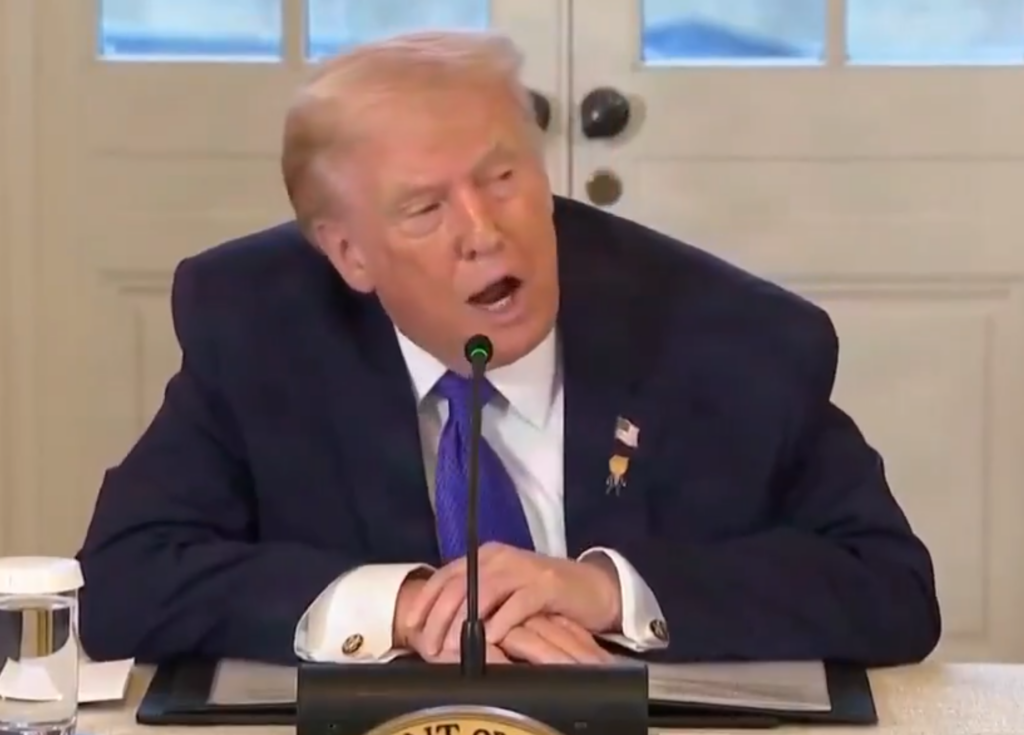
President Donald J. Trump declared on January 9, 2026 that the United States will move to acquire the island of Greenland whether the Kingdom of Denmark “likes it or not,” significantly escalating tensions with America’s long-time NATO ally as part of a broader push to counter Russian and Chinese influence in the Arctic, as reported by The National Pulse and corroborated by international press coverage.
Speaking to reporters following a high-level meeting with oil and gas executives at the White House, Trump said he would prefer to acquire Greenland “the easy way” through negotiation with Denmark but warned that if that fails, “we’re going to do it the hard way,” implying potential coercive measures. The President emphasized that if the U.S. does not act, Russia or China could dominate the island, framing U.S. action as essential for national security and Western strategic interests.
Trump argued that the Arctic territory’s geographic position and resources make it critical for American defense and economic strength, noting the presence of Russian and Chinese naval forces in the broader region. “If you look just outside Greenland right now, there are Russian destroyers, Chinese destroyers, and Russian submarines all over the place,” Trump said, asserting that the United States would not allow either nation to assume control.

Greenland is a self-governing territory within the Kingdom of Denmark, and both Danish and Greenlandic leaders have staunchly rejected U.S. efforts to negotiate its transfer. Danish Prime Minister Mette Frederiksen has repeatedly stressed that Greenland is not for sale and that any attempt to seize it would threaten NATO’s post-World War II security framework, with other European leaders agreeing that Greenland’s future should be decided by its own people and Denmark, not outside powers.
Trump’s comments come amid a series of assertive foreign policy actions, including the recent U.S. military operation that captured former Venezuelan President Nicolás Maduro. The Greenland initiative, his supporters argue, is part of a broader strategy to reinforce American influence against adversaries and secure strategic outposts in the Arctic.
The renewed push has drawn widespread international concern. European allies, including France, Germany, Britain, Italy, and others, issued statements affirming Greenland’s sovereignty under Denmark and rejecting unilateral U.S. control, while Denmark has urged diplomatic engagement rather than threats.
The situation has prompted diplomatic outreach: U.S. Secretary of State Marco Rubio plans to meet with Danish officials to discuss the issue, but Danish representatives have made clear they will not negotiate over Greenland’s ownership. Polls indicate overwhelming opposition to annexation among Greenlanders, further complicating U.S. efforts.
Trump’s stance reflects a broader debate within the U.S. government over the extent of American power to act globally, particularly without explicit congressional authorization, as some lawmakers have expressed unease with unilateral military initiatives.
As of now, the United States and Denmark remain at odds over the future of Greenland, with Washington asserting strategic necessity and Copenhagen defending sovereignty and alliance commitments.