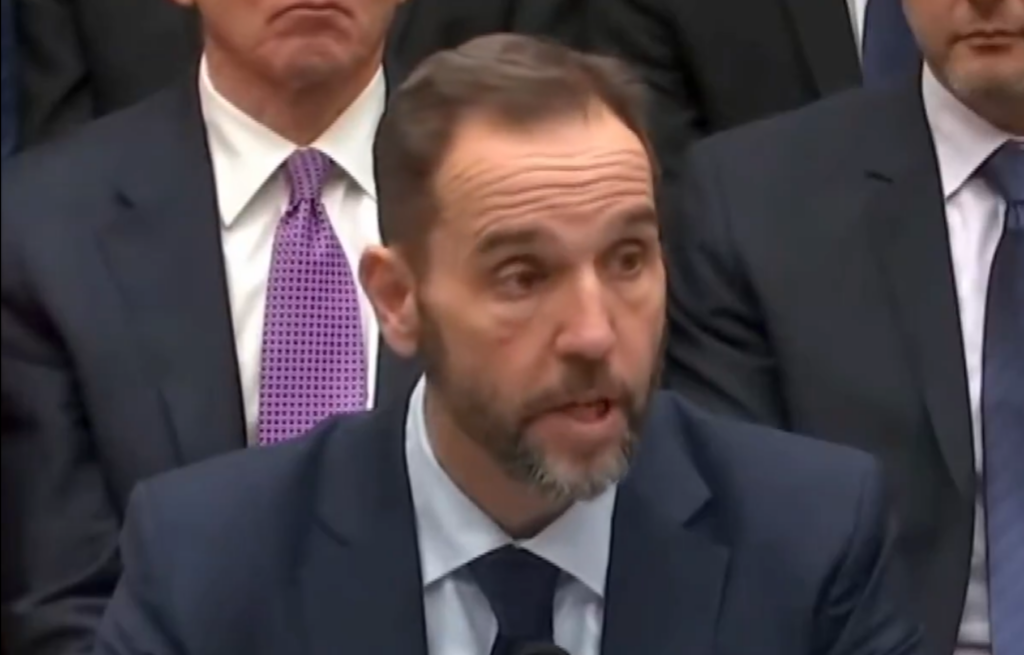
Special Counsel Jack Smith testified Thursday before the House Judiciary Committee amid intensifying scrutiny from Republicans who argue his prosecutions of Donald Trump represent a politically motivated abuse of federal power rather than a neutral pursuit of justice.
The hearing, led by Committee Chairman Jim Jordan, began at 10 a.m. ET and followed Smith’s closed-door deposition in December 2025. Republicans used the public session to challenge the legitimacy of Smith’s authority and the unprecedented nature of prosecuting the leading opposition candidate to the current administration.
Chaos erupted during the hearing after Rep. Darrell Issa accused Jack Smith of admitting he withheld critical information from a judge while targeting Republicans, prompting Issa to yield “in disgust” over what he called a serious abuse of authority.

Central to GOP criticism was a 2024 ruling by U.S. District Judge Aileen Cannon, who determined that Smith’s appointment as special counsel was unconstitutional. Lawmakers argued that the decision alone casts serious doubt on the validity of the investigations into classified documents and Trump’s actions surrounding the 2020 election. Several members framed the prosecutions as an end-run around constitutional safeguards designed to prevent exactly this type of politically charged lawfare.
Democrats, by contrast, devoted their questioning to defending the indictments themselves. Rep. Ted Lieu urged the public to listen to Smith’s explanation of “why Trump was indicted,” presenting the cases as straightforward applications of federal law. Smith echoed that position, insisting his team had assembled evidence of criminal conduct and repeatedly asserting that “no one is above the law.”
Republicans countered that the slogan rings hollow when the Justice Department appears to apply different standards depending on political affiliation. They noted that aggressive legal theories were deployed against Trump while other high-ranking officials accused of mishandling classified information or election-related irregularities were never charged. To critics, the pattern suggests selective prosecution rather than impartial justice.
The hearing also featured carefully chosen symbolism. Former Capitol Police officer Michael Fanone, who was assaulted during the January 6 riot, sat directly behind Smith. Democrats pointed to Fanone’s presence as a reminder of the violence that followed the contested election. Republicans, however, described the move as a calculated emotional appeal designed to shield Smith from legitimate constitutional criticism.
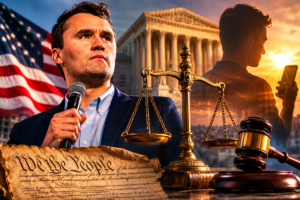
From a biblical worldview, the hearing raised fundamental questions about justice and authority. Scripture teaches that rulers must not pervert justice or show favoritism, warning that unequal application of the law undermines social order. Critics of Smith’s prosecutions argue that targeting a former president—and current political rival of the sitting administration—threatens the principle of equal weights and measures that undergird both biblical and constitutional law.
As Smith concluded his testimony, the divide remained unbridgeable. Democrats portrayed the prosecutions as necessary to defend democracy, while Republicans argued the greater danger lies in normalizing the use of federal prosecutors to cripple political opponents. With the nation still fractured after the 2024 election cycle, the hearing reinforced concerns that the justice system itself is becoming a battlefield in America’s ongoing political and moral crisis.