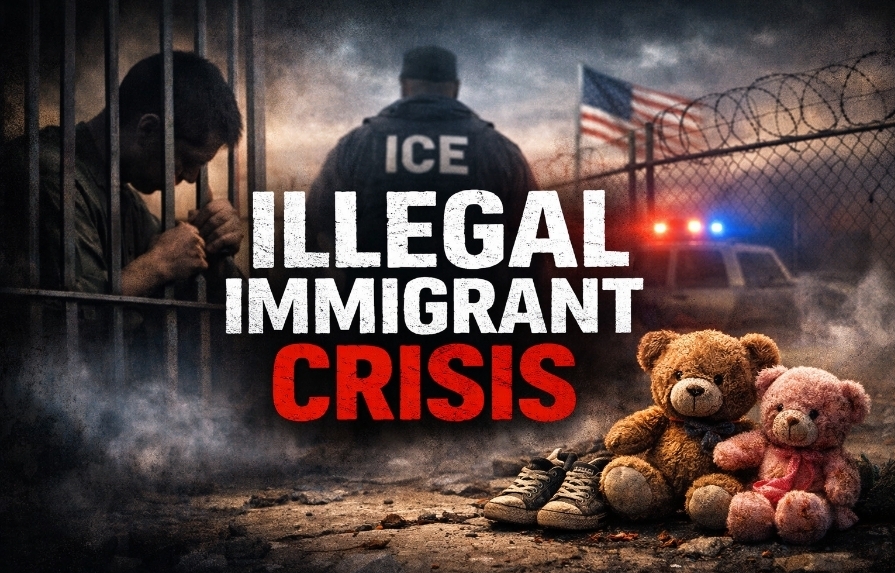
As reported by the Daily Mail, an Irish national living illegally in the United States is claiming he has been unfairly targeted under President Donald Trump’s renewed immigration enforcement efforts—even as he faces potential drug charges in his home country and leaves behind twin toddler daughters.
The man, who entered and remained in the U.S. unlawfully, was detained by Immigration and Customs Enforcement (ICE) amid stepped-up enforcement operations. According to the Daily Mail, he has portrayed himself as a victim of a harsh crackdown, emphasizing the hardship faced by his young children in his absence.
But critical context complicates that narrative. The Daily Mail reports that he could face drug-related charges if returned to Ireland. While full details of the alleged offenses were not provided, the possibility of criminal liability raises broader questions about why this case has been elevated as a symbol of alleged enforcement “overreach.”

There is also another dynamic at play—one that the media is unlikely to acknowledge openly.
For years, critics of immigration enforcement have framed border security and deportations as inherently racist, often implying that support for enforcing immigration law is rooted in hostility toward Hispanic or black migrants. The fact that this individual is a white Irishman serves a particular narrative function. By spotlighting a white European illegal immigrant as the face of enforcement, sympathetic media coverage appears designed to test whether conservatives will maintain their principled support for the rule of law when the person involved does not fit the usual racial caricature.
In effect, the subtext is clear: if conservatives continue to support deportation, they risk being labeled heartless toward a white father; if they object to deportation in this case, critics will claim it proves enforcement was never about law, but race.
Yet the biblical principle of impartial justice rejects both partiality and prejudice. Scripture commands that the law be applied without favoritism (Leviticus 19:15). A nation that enforces immigration statutes against some but not others—based on race, optics, or emotional appeal—abandons equal justice under law.
The presence of young children in such cases is always tragic. No faithful Christian should dismiss the human toll. But compassion does not nullify accountability. Adults make choices, and those choices carry consequences. Entering or remaining in a country illegally is a conscious act. If, as reported, additional legal troubles await him in Ireland, the responsibility for his situation rests primarily with his own decisions.
Supporters of President Trump’s immigration policies argue that border security and interior enforcement are essential to national sovereignty, public safety, and fairness to those who follow legal pathways. They reject the premise that enforcement is racially motivated, insisting instead that it is grounded in the neutral application of the law.
Ultimately, this case underscores the broader cultural battle over immigration: whether America will be governed by laws applied equally, or by narratives shaped for political effect. The race of the offender should not determine whether the law is enforced. Justice that bends to media optics is not justice at all.