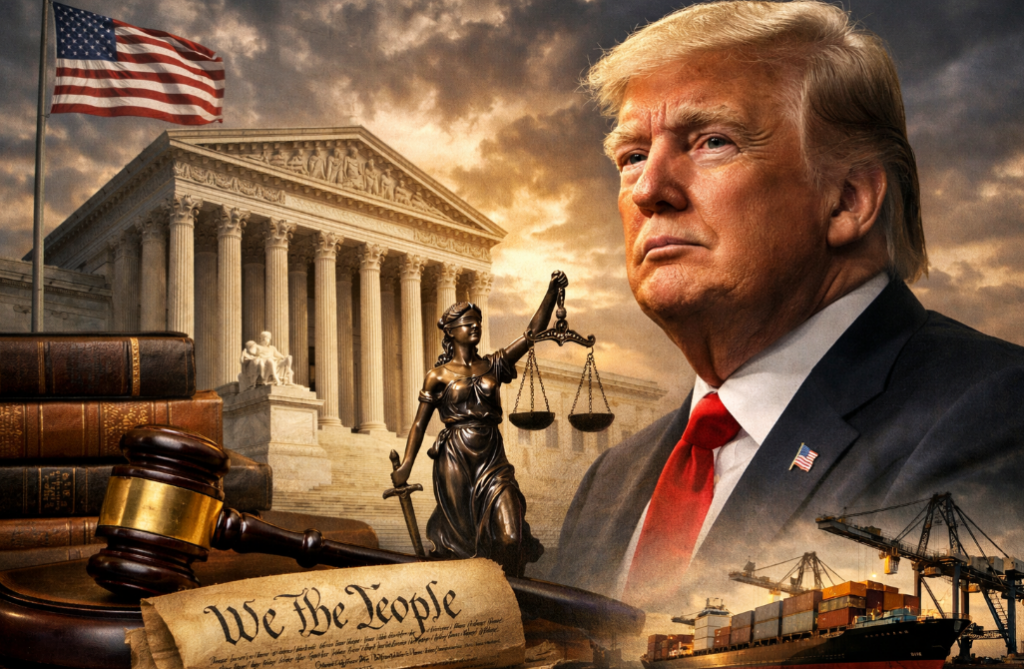
The U.S. Supreme Court has blocked former President Donald Trump’s tariff policy in a significant ruling that narrows the scope of presidential authority over trade. As reported by Fox News, the high court determined that the administration overstepped its statutory authority in imposing certain tariffs.
The dispute centered on Trump’s use of federal trade law to levy tariffs, which his administration argued were necessary to protect national security and combat unfair foreign trade practices. The tariffs were aimed at strengthening domestic industry and reducing economic dependence on foreign nations viewed as strategic competitors.
However, challengers argued that the executive branch exceeded the limits Congress intended when delegating tariff authority. In siding against the Trump policy, the Supreme Court effectively placed clearer boundaries on how far a president may go in invoking national security justifications to impose trade penalties.

The ruling underscores the constitutional framework in which Congress holds primary authority over regulating commerce, while delegating limited powers to the executive branch. The Court’s decision signals that such delegation is not without guardrails and that statutory language must be followed carefully.
For supporters of Trump’s trade approach, the tariffs represented an effort to restore American manufacturing, secure supply chains, and defend national sovereignty. They argued that aggressive trade enforcement was necessary in a global economy increasingly dominated by adversarial regimes.
Opponents contended that the tariffs imposed economic costs and strained international relationships. The Court’s ruling reflects judicial concern over maintaining separation of powers and ensuring that executive action remains tethered to congressional intent.
From a biblical worldview, governance requires both strength and lawful restraint. Romans 13 affirms that governing authorities are established to uphold order and justice, yet Scripture also warns against rulers exceeding rightful bounds. A just system depends on clearly defined authority exercised within its proper limits.
The decision does not eliminate the broader debate over trade policy or America’s economic direction. Congress retains the power to revise trade statutes if lawmakers choose to expand or clarify presidential authority in the future. For now, however, the Court has reaffirmed that trade power ultimately flows from legislative intent, not unilateral executive action.
The ruling marks a pivotal moment in the ongoing national conversation about economic sovereignty, constitutional boundaries, and the appropriate balance between decisive leadership and lawful restraint.