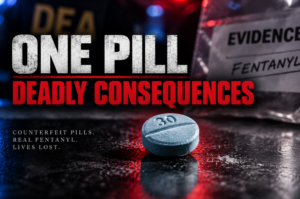
A federal grand jury in Ohio has delivered a sweeping indictment against foreign actors accused of fueling the deadly fentanyl crisis devastating American communities. According to a press release from the US Attorney’s Office for the Southern District of Ohio, six Chinese nationals and two China-based pharmaceutical companies now face serious federal charges tied to narcotics trafficking, money laundering, and alleged support for a Mexican cartel designated as a foreign terrorist organization.
The indictment, returned in Dayton, adds to an earlier indictment in September 2025, and marks a significant escalation in how U.S. authorities are confronting the international supply chains behind fentanyl. Prosecutors allege that the defendants knowingly manufactured and distributed chemical precursors—key ingredients used to produce fentanyl—and sold them directly to drug traffickers targeting the United States.
U.S. Attorney Dominick S. Gerace II described the case as a historic step in holding foreign actors accountable, noting that it represents the first time in the Southern District of Ohio that charges include providing material support to a cartel officially designated as a terrorist organization under recent federal actions. This designation reflects a growing recognition that cartel-driven drug trafficking is not merely criminal, but a form of organized violence that destabilizes communities and destroys lives.

According to federal investigators, the accused companies—Shandong Believe Chemical Company Pte Ltd. and Shandong Ranhang Biotechnology Co. Ltd.—worked in coordination with individual operatives to market and sell these substances globally. The chemicals were allegedly used not only to produce fentanyl but also to “cut” the drug, dramatically increasing its volume and potency. One such substance, medetomidine, is described as an animal tranquilizer far more powerful than morphine, capable of multiplying drug yields many times over.
Authorities further allege that three of the defendants attempted to supply these materials to an individual they believed to be affiliated with the Cártel del Golfo, a violent transnational organization involved in drug trafficking, kidnapping, and human smuggling. The accusation underscores the deep and troubling cooperation between foreign suppliers and cartel networks that profit from addiction and death.
Financial transactions tied to the operation reportedly relied heavily on cryptocurrency, allowing funds to be routed overseas and complicating law enforcement tracking efforts. This highlights the increasingly sophisticated methods used by global narcotics networks to evade accountability.
The charges carry severe penalties, including potential life sentences for drug trafficking conspiracies and up to 20 years for material support of terrorism and money laundering. While the defendants are presumed innocent until proven guilty, the case signals a broader federal effort to dismantle the entire supply chain—from overseas manufacturers to domestic distributors.
From a moral standpoint, the fentanyl epidemic represents not just a legal crisis but a spiritual and societal one. The deliberate targeting of vulnerable populations with lethal substances stands in stark contrast to the biblical call to protect life and uphold human dignity. The pursuit of profit through addiction and death reflects a deeper moral decay that demands both justice and repentance.
Federal officials emphasized that this case is part of a larger initiative aimed at confronting transnational criminal organizations and restoring safety within American communities. As the investigation continues, it serves as a sobering reminder of the global forces contributing to the crisis—and the urgent need for accountability at every level.