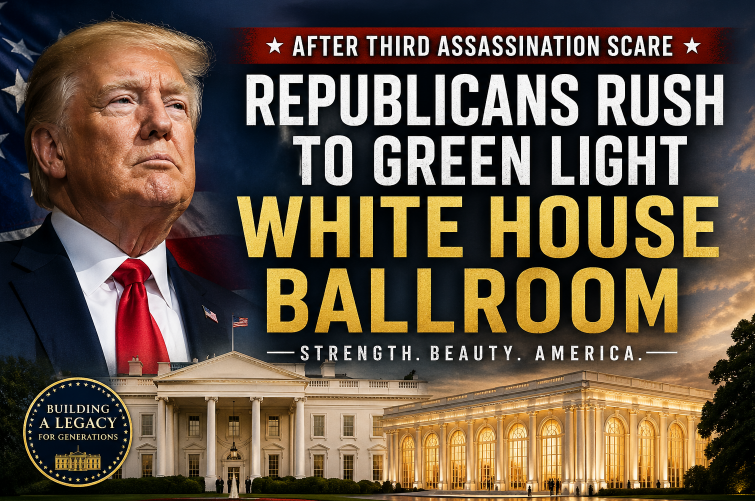
As reported by Fox News, Republican lawmakers are moving swiftly to approve plans for a new ballroom at the White House following what officials describe as a third assassination scare involving Donald Trump. The renewed urgency reflects growing concern among GOP leaders about both the safety of the president and the broader need to modernize facilities used for official state functions.
According to the report from Fox News, the proposed ballroom would provide a secure, centralized space for hosting large gatherings, reducing reliance on temporary structures that can present logistical and security vulnerabilities. Lawmakers argue that such an addition is long overdue, noting that past administrations have relied on tents or external venues for major events—arrangements that may expose attendees to unnecessary risk.
The latest security incident, while not resulting in harm, has intensified calls among Republicans to take proactive measures. Several lawmakers emphasized that the presidency is not merely a political office but an institution that must be protected with the utmost seriousness. In their view, ensuring both the physical safety of national leaders and the dignity of official events is a matter of stewardship.

Supporters of the ballroom project also frame the effort in terms of American heritage and excellence. They argue that the White House, as a symbol of the nation, should reflect both strength and beauty—values deeply rooted in a biblical understanding of order, craftsmanship, and respect for authority. By constructing a permanent, secure venue, proponents believe the United States can better host foreign dignitaries and conduct official business without compromise.
Critics, however, have raised concerns about cost and priorities, suggesting that taxpayer funds should be directed elsewhere. Yet Republican backers counter that national security and the integrity of the executive office are foundational responsibilities of government. In their view, failing to address known vulnerabilities—especially after repeated threats—would be both negligent and short-sighted.
The discussion also underscores a broader cultural divide. While some dismiss the proposal as unnecessary expansion, others see it as a practical and even moral obligation to safeguard leadership and preserve national institutions. Scripture teaches that governing authorities are established for order and protection, and many conservatives view this initiative as consistent with that principle.
As deliberations continue, the ballroom proposal stands at the intersection of security, tradition, and national identity. Whether it ultimately moves forward may depend not only on budgetary considerations but on how lawmakers—and the public—prioritize the protection of leadership and the preservation of America’s institutional legacy.