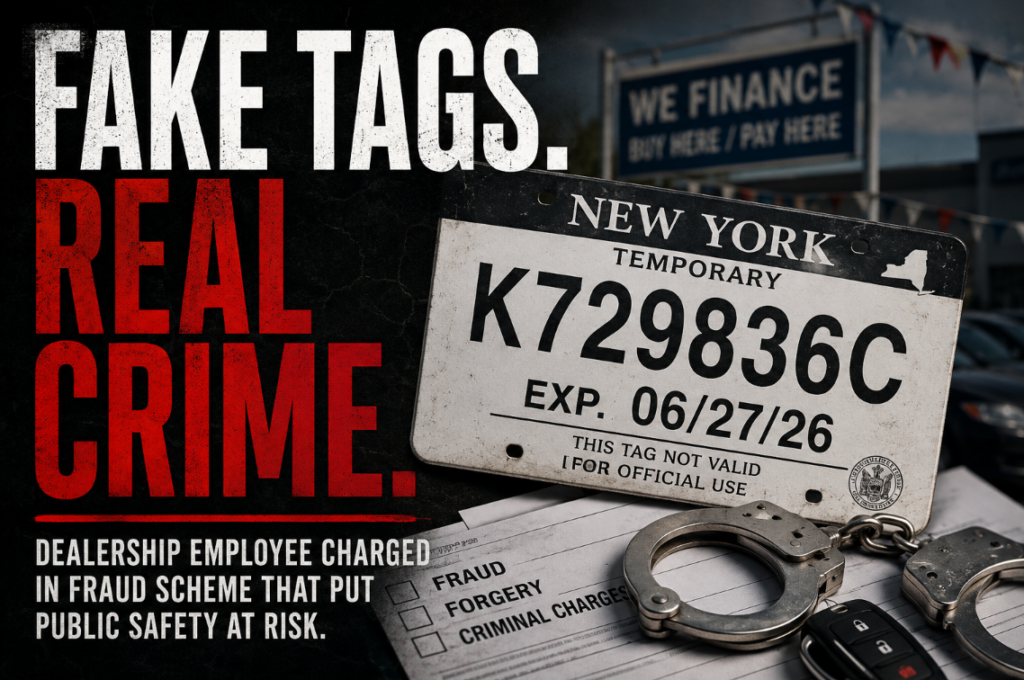
As reported by Democrat and Chronicle, federal authorities have arrested multiple individuals connected to an alleged multimillion-dollar fake temporary license plate operation tied to sham auto dealerships in New York.
According to investigators, the defendants allegedly created fraudulent dealership entities in order to generate and distribute thousands of fake temporary tags, often referred to as “ghost plates.” Prosecutors say the operation allowed drivers to evade tolls, traffic enforcement cameras, registration requirements, and potentially insurance accountability. Authorities estimate the scheme generated more than 100,000 fraudulent tags and millions of dollars in illegal proceeds.
The growing use of fraudulent temporary plates has become a nationwide concern as law enforcement agencies struggle to track vehicles tied to crimes, hit-and-runs, and repeat traffic offenses. In many cases, fake tags are nearly indistinguishable from legitimate dealer-issued registrations, allowing offenders to operate anonymously for extended periods.

Federal prosecutors say the defendants exploited weaknesses in dealership registration systems by creating shell businesses and abusing dealer access privileges. The case reflects a broader pattern emerging across the country, where criminals increasingly use online marketplaces and social media to distribute counterfeit temporary tags. Similar arrests in Kentucky and New York have revealed organized efforts to sell forged registrations directly to consumers.
The rise of fraudulent plates has also intensified concerns about government accountability and public safety. Law enforcement officials warn that fake tags undermine traffic enforcement, toll collection systems, and criminal investigations while placing law-abiding citizens at greater risk on the roads.
Critics say the situation also highlights a deeper erosion of respect for law and order in American society. As institutions weaken enforcement standards and criminals exploit bureaucratic loopholes, ordinary Americans are often left paying the price through higher insurance costs, unpaid toll burdens, and diminished public safety.
From a biblical perspective, civil order and honest conduct are foundational principles of justice. Scripture repeatedly condemns fraud, deception, and dishonest gain. Schemes built on forgery and false representation not only violate civil law but also reflect a broader moral decay that harms communities and undermines trust.
Investigators say the case remains ongoing, with additional charges possible as authorities continue examining dealership records, financial transactions, and online sales activity connected to the alleged fraud network.