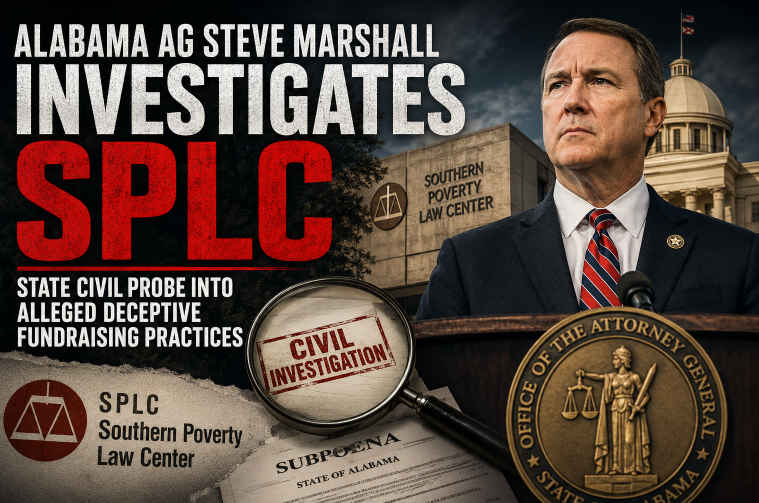
As reported by WAKA Action 8 News, Alabama Attorney General Steve Marshall has launched a state civil investigation into the Southern Poverty Law Center (SPLC), alleging the Montgomery-based organization may have violated Alabama consumer protection and charitable organization laws through deceptive fundraising practices.
The investigation follows an already ongoing federal case in which the SPLC faces fraud and money laundering charges related to the organization’s alleged use of donor funds to pay informants embedded within extremist organizations, including the Ku Klux Klan and neo-Nazi groups. Federal prosecutors claim the SPLC funneled millions of dollars to individuals operating inside hate groups while continuing to solicit donations from supporters under the organization’s public anti-hate mission.
According to the subpoena issued by Marshall’s office, the SPLC must provide requested records by June 1. State investigators are seeking information related to donor communications, fundraising methods, and payments connected to informants.

Marshall argued the case raises broader concerns about institutional accountability and public trust in politically influential nonprofits.
“My Office has been fighting the SPLC for years,” Marshall said, citing past legal battles involving parental rights, congressional districting, and opposition to “transgender” medical procedures for minors. He accused the organization of “monetizing hate” and “trading on race-baiting” for financial gain.
The SPLC has denied wrongdoing in both the federal and state matters. Organization officials maintain that law enforcement agencies were aware of its use of paid informants and argue the practice was intended to monitor dangerous extremist activity. Critics, however, say donors may not have been fully informed about how charitable contributions were being used.
The controversy has renewed longstanding conservative criticism of the SPLC, which for years has published “hate group” lists that many Christians, conservatives, and family advocacy organizations argue have been weaponized against political opponents and biblical beliefs regarding sexuality and gender.
The organization, founded in 1971, has increasingly faced scrutiny not only from conservatives but also from former staff and legal analysts questioning its internal culture, political activism, and fundraising operations. Recent years have brought layoffs, leadership turmoil, and accusations that the group shifted from civil rights litigation toward ideological activism and financial expansion.
For many conservatives and Christians, the investigation represents a significant test of whether politically connected nonprofits will face equal accountability under the law. The case also highlights growing tensions over the role powerful advocacy organizations play in shaping public discourse, especially when traditional Christian beliefs are increasingly labeled “extremist” by activist institutions.