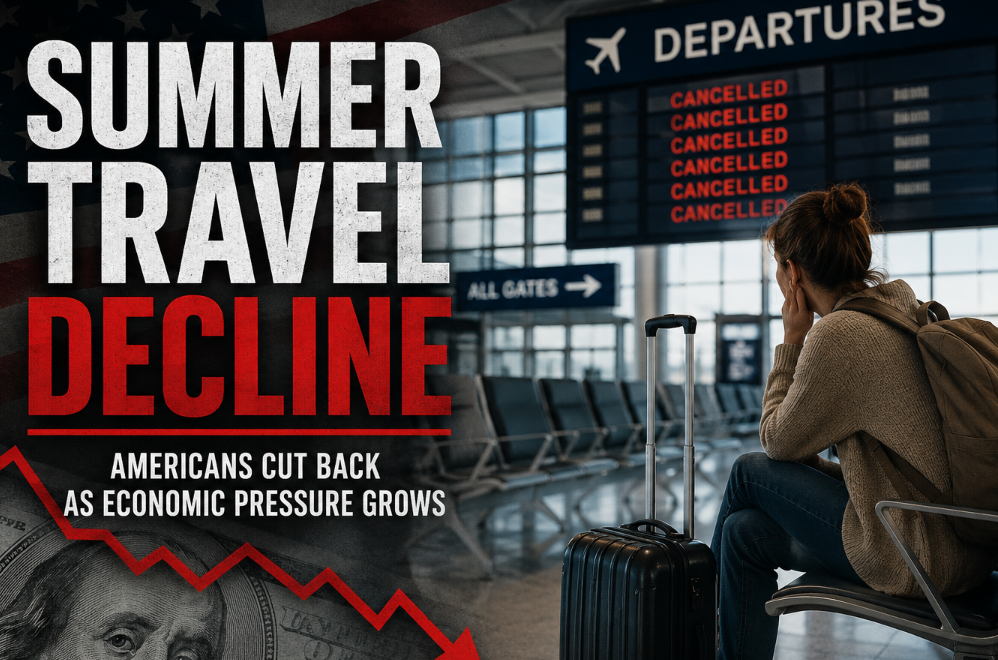
As reported by The Independent, fewer Americans are planning summer vacations this year as rising costs continue to strain household budgets and expose the growing financial divide between higher-income and working-class families.
According to a recent Deloitte study cited by the outlet, only 45 percent of Americans plan to take a domestic or international summer vacation with paid lodging in 2026, marking the lowest level recorded in six years. Researchers found that affordability concerns remain the primary factor keeping many families at home.
The findings reflect what millions of Americans have experienced firsthand at grocery stores, gas stations, and utility counters. As inflation continues to eat away at purchasing power, discretionary spending has become increasingly difficult for many households. Vacation travel, once considered a regular part of family life, is now viewed by many as a luxury expense that can no longer be justified.

The report found that households earning less than $100,000 annually are reducing travel plans at twice the rate of households earning above that threshold. For many middle-class and working-class families, travel is among the first expenses to be eliminated when budgets become strained.
Researchers noted that roughly 35 percent of Americans who are not traveling this summer cited high costs as the primary reason. Rising fuel prices, airfare increases, lodging expenses, and broader inflationary pressures have combined to make even modest vacations significantly more expensive than in previous years.
Meanwhile, Americans who do plan to travel are spending more than ever. Travelers have spent an average of $7,250 through March, according to data referenced in the report. Higher-income households are increasingly directing spending toward premium experiences, upgraded flights, and luxury accommodations.
The trend highlights a widening economic divide in the country. While affluent Americans continue to travel and absorb rising costs, many families are being forced to choose between essential expenses and recreational activities. The situation raises broader concerns about the health of the economy and the long-term impact of inflation on family life.
For many Americans, summer vacations have traditionally served as an opportunity to strengthen family bonds, create lasting memories, and enjoy rest from the demands of work. Yet as economic pressures mount, those opportunities are becoming less accessible for households already struggling to keep up with everyday expenses.
The growing gap between those who can comfortably afford leisure travel and those who cannot serves as another reminder that economic policies carry real consequences for families. Responsible stewardship, stable prices, and economic opportunity remain critical foundations for strong households and thriving communities.