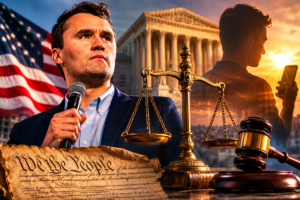
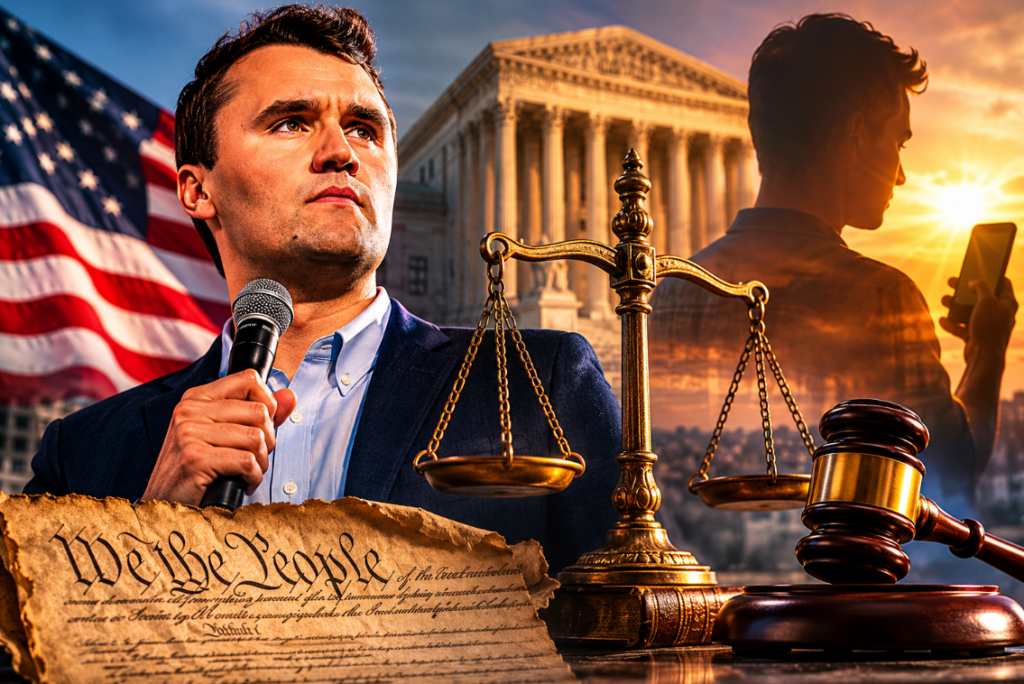
In recent months, government agencies have paid more than $1.5 million to settle claims brought by public employees who were disciplined, fired, arrested, or otherwise punished for social media posts related to Kirk’s death. As reported by USA Today, those settlements span multiple states and involve a variety of government employers, from state agencies to public universities and local law enforcement.
The facts of the individual cases differ. Some of the speech was crude. Some was inflammatory. Some was deeply offensive to many Americans. Yet the growing legal liability confronting government employers has little to do with whether the speech was admirable. The central issue is whether government officials may punish citizens for expressing political opinions while acting as private individuals outside the workplace.
For generations, courts have answered that question with substantial skepticism.

One of the most important distinctions in American law is the difference between private employment and public employment. Yet that distinction is frequently overlooked whenever a political controversy erupts online.
In the private sector, employers generally enjoy broad discretion under at-will employment rules. A company may determine that an employee’s public statements damage its reputation, undermine workplace morale, or conflict with corporate values. In many jurisdictions, the employer can terminate that employee even if others view the decision as unfair or politically motivated.
Government employers do not possess the same freedom.
A public university, state agency, city government, or police department is not merely another employer. It is an arm of the state. As a result, constitutional limitations apply in ways that simply do not exist in the private sector. When government officials punish employees for speech made as private citizens on matters of public concern, they risk violating the First Amendment. Courts have repeatedly recognized that citizens do not surrender their constitutional rights simply because they accept public employment.
That principle is especially important during periods of intense political emotion.
The aftermath of Kirk’s assassination created exactly that environment. Emotions ran high. Social media amplified outrage. Public pressure mounted on employers to distance themselves from controversial statements. Politicians and activists encouraged citizens to identify individuals who expressed sympathy for, criticism of, or indifference toward the tragedy.
For many private employers, those pressures produced difficult but legally permissible employment decisions. For government agencies, however, acting on those same pressures created constitutional problems. The settlements themselves illustrate the point.
Ball State University agreed to pay former health director Suzanne Swierc $225,000 after litigation over her termination following a social media post criticizing Kirk. Florida agreed to pay former wildlife biologist Brittany Brown $485,000 after her dismissal over a reposted Instagram story. Tennessee officials reached an $850,000 settlement with former police officer Larry Bushart after criminal charges arising from a social media post ultimately collapsed.
Notably, none of these settlements required admissions of wrongdoing. Yet government entities generally do not authorize large financial payouts because they believe their legal position is exceptionally strong. The settlements suggest substantial concern about how courts might evaluate the underlying constitutional questions.
More importantly, these cases expose a troubling pattern. Too many public officials appear to have treated political controversy as justification for government action against protected speech. That is precisely what the First Amendment was designed to prevent.
The Constitution’s protections were never intended solely for popular opinions. Speech that enjoys overwhelming public support rarely requires constitutional protection in the first place. The real test comes when speech is unpopular, offensive, provocative, or emotionally charged. History provides countless examples.
Anti-war protesters, civil-rights activists, religious minorities, pro-life advocates, labor organizers, and political dissidents have all benefited from constitutional protections that shield unpopular expression from government retaliation. In nearly every era, somebody has argued that a particular viewpoint was too offensive, too dangerous, or too disruptive to tolerate.
The First Amendment exists because the government cannot be trusted to make those judgments fairly.
That lesson applies regardless of ideology.
Conservatives rightly object when government institutions punish citizens for opposing abortion, criticizing gender ideology, questioning public-health mandates, or expressing traditional religious beliefs. Yet the same constitutional principle protects speech that conservatives may find offensive or reprehensible.
Rights are either applied consistently, or they eventually cease to be rights at all.
The temptation facing government officials is understandable. When a controversial post generates national headlines, political leaders often feel pressure to demonstrate action. Donors complain. Advocacy groups organize campaigns. Media outlets demand responses. Social media users call for immediate consequences.
But public officials swear an oath to uphold the Constitution, not to manage public relations. The financial consequences of ignoring that duty are increasingly obvious.
Every settlement ultimately comes from taxpayer resources. Every lawsuit requires government attorneys, court proceedings, administrative investigations, and countless hours of public-sector labor. Even when officials believe they are acting in good faith, constitutional violations can become extraordinarily expensive.
There is also a broader cultural lesson. Christians are not obligated to celebrate offensive speech. Scripture calls believers to exercise wisdom, restraint, and love in how they communicate. Many of the comments made after Kirk’s assassination reflected neither grace nor compassion. Christians can condemn such rhetoric without hesitation.
But moral disapproval and government punishment are not the same thing.
A biblical understanding of limited government recognizes that civil authorities possess legitimate powers, but those powers are not unlimited. Government officials do not have the authority to police every offensive opinion expressed by citizens. In America, constitutional protections place meaningful restraints on government power precisely because human institutions are prone to abuse authority when passions run high.
The lesson from these settlements should not be that every controversial social media post deserves praise. Rather, it should remind public officials that constitutional rights remain in force even when public sentiment turns hostile.
Charlie Kirk spent much of his public career arguing for robust political debate. Whether Americans agreed with him or disagreed with him, the constitutional principles implicated by these cases transcend any single individual.
Government agencies that continue disciplining employees for protected off-duty speech are likely to keep learning the same expensive lesson. And taxpayers will keep receiving the bill.