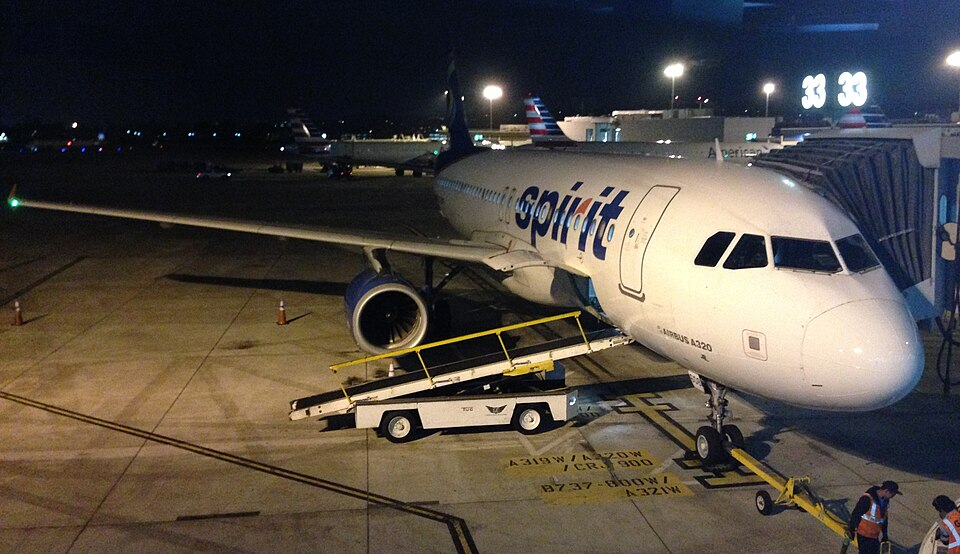
Spirit Airlines is facing a potential shutdown after failing to secure a critical financial lifeline, marking a significant moment of instability in the U.S. aviation sector.
The budget airline, long known for its ultra-low fares and no-frills model, has struggled under mounting debt, rising operational costs, and shifting consumer demand. Despite efforts to restructure and attract new investment, the company has been unable to stabilize its finances, leaving bankruptcy or liquidation as increasingly likely outcomes.
Spirit’s financial distress follows years of aggressive expansion and a business strategy built on thin margins. While the airline once thrived by offering cheaper alternatives to major carriers, recent economic pressures—including inflation, fuel costs, and labor challenges—have seemingly exposed the vulnerabilities of such a model. The report notes that bailout discussions ultimately fell through, removing what many saw as the company’s last viable path forward.

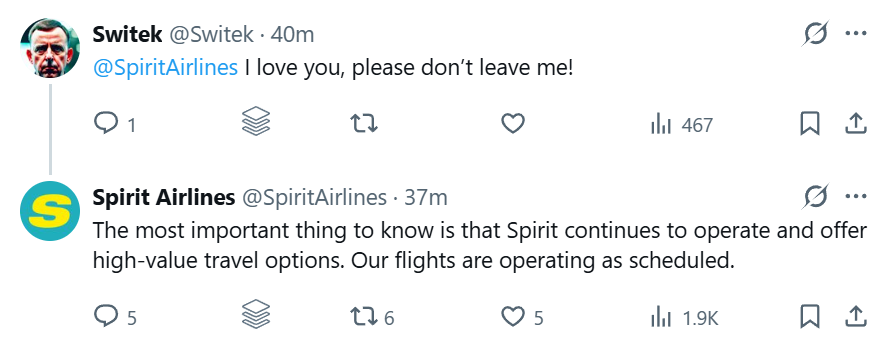
While the news of Spirit’s possible shutdown has been met with quite a bit of social media dogpiling, cheering the airline’s demise, some customers are not looking forward to losing the budget-friendly option:
The situation also reflects broader concerns about the health of the American economy. As costs rise for both companies and consumers, discretionary spending—such as travel—is often among the first areas to be reduced. This reality has placed additional strain on budget airlines that depend heavily on high passenger volume and price-sensitive customers.
Spirit’s collapse, if finalized, could have ripple effects across the airline industry, potentially reducing competition and leading to higher fares overall. It may also impact thousands of employees and disrupt travel plans for millions of passengers who rely on low-cost options.
From a broader perspective, this development raises questions about fiscal responsibility and long-term sustainability in corporate America. Companies built on razor-thin margins and heavy debt are particularly vulnerable in uncertain economic conditions. Scripture warns of the dangers of unstable foundations, and this situation serves as a reminder that enduring success requires prudence, stewardship, and resilience—not merely short-term gain.
While market forces ultimately determine which businesses succeed or fail, the consequences extend beyond balance sheets. Families, workers, and communities often bear the brunt of corporate collapse. In this case, the potential loss of a major airline underscores the importance of economic policies and business practices that prioritize stability and accountability.
As the situation unfolds, industry observers will be watching closely to see whether other airlines face similar pressures—and whether policymakers take steps to address the underlying economic challenges affecting American businesses today.