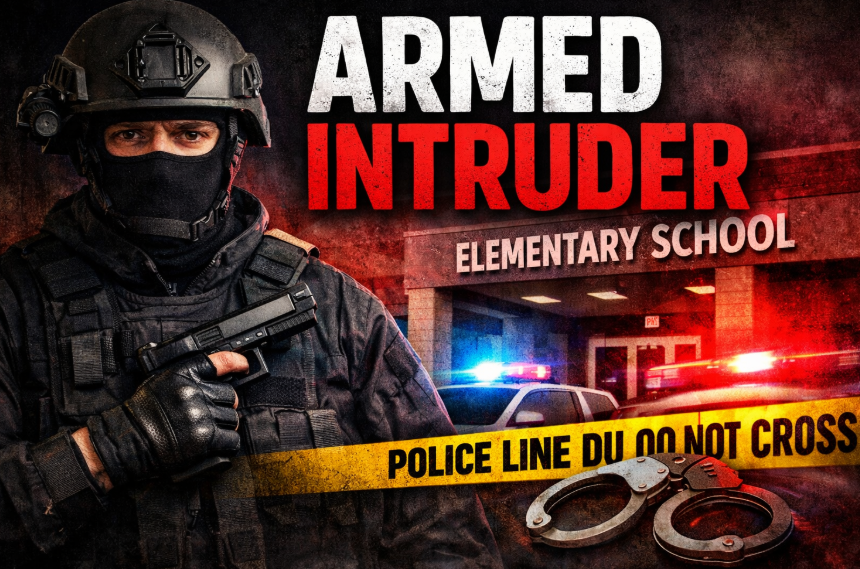
An Iraqi-born man who had recently become a naturalized U.S. citizen was arrested after entering a Texas elementary school wearing tactical gear and carrying a weapon, according to reporting by Breitbart.
Authorities say the man, described as being heavily outfitted in tactical equipment, entered the school premises armed, triggering an immediate law enforcement response. While no injuries were reported, the situation has raised serious concerns about school safety, border security, and the vetting process for individuals entering and remaining in the United States.
Police responded quickly to the scene and detained the suspect without further incident. Investigators have not publicly indicated a clear motive, but the alarming nature of the intrusion — involving a man equipped for potential violence entering a building filled with children — has left many parents and community members shaken.

Despite the gravity of the situation, a judge reportedly set the suspect’s bond at just $10,000 and ordered him to wear an ankle monitor upon release. The decision has drawn sharp criticism, with many questioning whether the justice system is adequately prioritizing the safety of children and local communities.
The case also raises broader questions about national security and immigration policy. The suspect’s status as a naturalized citizen has prompted renewed scrutiny of how individuals are vetted before being granted entry and citizenship in the United States. For many Americans, the incident underscores concerns that the federal government has failed to uphold its God-ordained responsibility to protect its citizens and maintain order (Romans 13:1–4).
In recent years, Americans have witnessed repeated breakdowns in institutional accountability — from border enforcement failures to lenient judicial decisions that appear disconnected from the seriousness of criminal acts. Incidents like this one, involving a heavily armed individual entering a school, highlight the potentially devastating consequences of such failures.
Parents entrust schools with the care and safety of their children, and Scripture places a high value on protecting the innocent. Jesus Himself warned against causing harm to little ones (Matthew 18:6), making the duty to safeguard children not only a civic responsibility but a moral one.
As the investigation continues, many are calling for greater transparency, stricter enforcement of laws, and a renewed commitment to the foundational principles that ensure both justice and public safety. The outcome of this case may serve as a test of whether those principles are still being upheld.